Explaining HTML Table Attributes: A Deep Dive into Cell Padding, Cell Spacing, Rowspan, Colspan, Display vs. Visibility

Experienced Software Developer interested in Web Development (MERN stack). Along with my technical skill sets, I possess clear verbal and written communication skills and in due time, am capable enough to do the assigned presentation and solve problems. I am always eager to learn more and improve my skills in various aspects of my career along with the organization.Are you interested in staying up-to-date with the latest tech trends and insights? Follow me for more thought-provoking tech articles that will help you expand your knowledge and skills as a developer.
HTML tables are like helpful tools that help you organize and show information neatly. We'll explore things like space around cells, spanning across rows and columns, and the differences between making something visible or just taking up space in the world of tables.
Understanding Cell Padding and Cell Spacing-
Cell Padding:
Definition: Cell padding determines the space between the content of a cell and its borders.
Example:
<table cellpadding="10">
  <tr>
    <td>Cell 1</td>
    <td>Cell 2</td>
  </tr>
</table>
Cell Spacing:
Definition: Cell spacing controls the space between cells within a table.
Example:
<table cellspacing="5">
  <tr>
    <td>Cell 1</td>
    <td>Cell 2</td>
  </tr>
</table>
Cell padding and spacing enhance the aesthetics and readability of tables by introducing space around cell content and between cells.
Navigating Rowspan and Colspan-
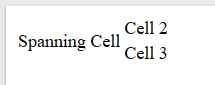
Rowspan:
Definition: Rowspan determines the number of rows a cell should span vertically.
Example:
<table>
  <tr>
    <td rowspan="2">Spanning Cell</td>
    <td>Cell 2</td>
  </tr>
  <tr>
    <td>Cell 3</td>
  </tr>
</table>
Colspan:
Definition: Colspan defines the number of columns a cell should span horizontally.
Example:
<table>
  <tr>
    <td colspan="2">Spanning Cell</td>
  </tr>
  <tr>
    <td>Cell 2</td>
    <td>Cell 3</td>
  </tr>
</table>
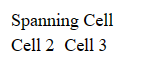
Rowspan and colspan enable the creation of complex table layouts by spanning cells across rows and columns.
Display vs. Visibility: Unveiling the Differences
Display:
Definition: The
displayproperty in CSS determines the rendering behavior of an element.Example:
.hidden {
  display: none;
}
Visibility:
Definition: The
visibilityproperty controls the visibility of an element.Example:
.hidden {
  visibility: hidden;
}
While display: none removes an element from the document flow, visibility: hidden hides an element but maintains its position.
Conclusion: Crafting Clear and Stylish Tables
In HTML tables, understanding attributes like cell padding, cell spacing, rowspan, colspan, and knowing the differences between display and visibility helps developers create tables that look good and work well. As you start building web pages with lots of data, paying attention to these details will help you create tables that not only show information in a clear way but also make the user's experience better.


